
Travel Pillow Shapes Explained: Which Design Supports How You Sleep?
Shape changes where a pillow makes contact, how it limits movement, and how much space it needs.
Instead of choosing by appearance, identify your main head movement and match it to a support pattern that works with your seat and packing limits.
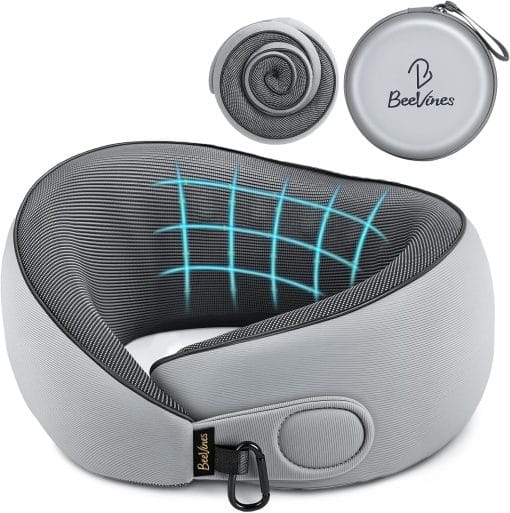
Four Common Shape Families Solve Different Movement Problems
The useful question is not which shape looks most comfortable. It is where the pillow creates support and whether that contact matches the direction your head usually moves.
U-Shaped
Wraparound
Side-Support
Body / Multi-Position
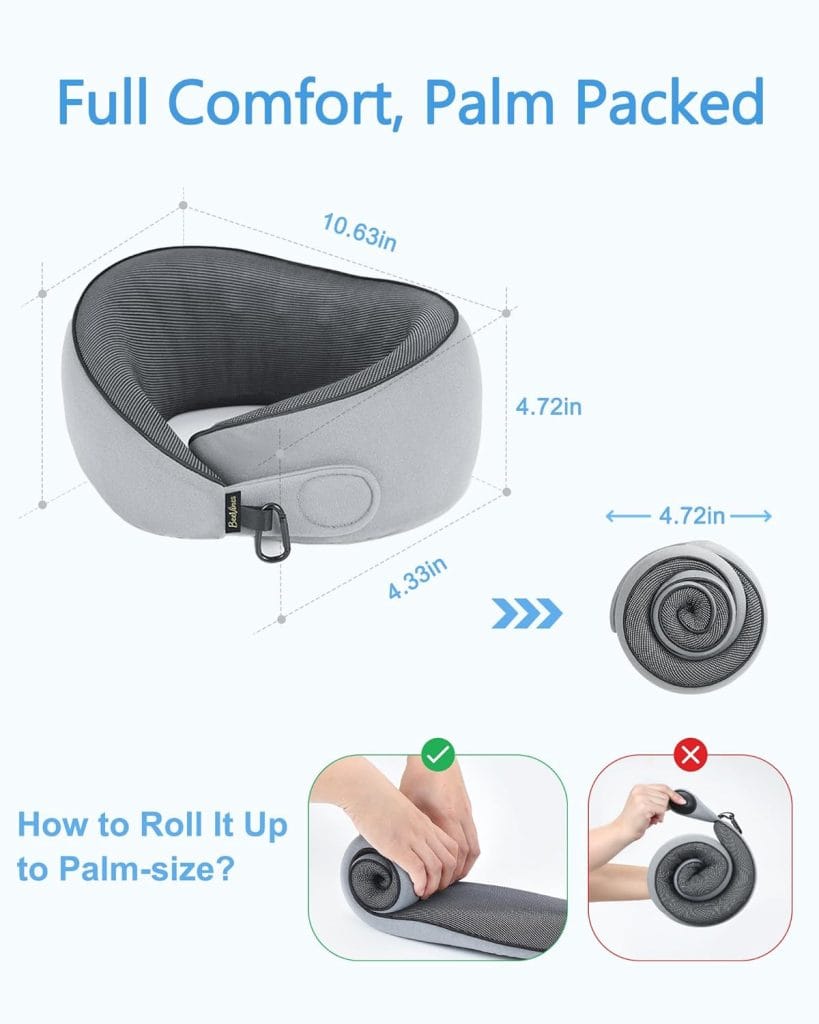
Trace the Contact Points, Not the Marketing Name
Two products can use different names while creating a similar support pattern. Look at the front opening, side walls, rear pad, and any extended body section to understand where the design actually works.
Shape Decides Where Support Is Delivered
The visible outline of a travel pillow is more than a styling choice. It determines where the product can make contact with the neck, jaw, chin, head, and sometimes the upper body. A familiar U-shape leaves the front open, while a wraparound design can add front contact. Directional side-support products focus on one leaning pattern, and body-style designs spread support over a larger area. Each approach solves a different movement problem. For a closely related guide, see travel pillow with chin support.
When reading a listing, ignore the shape name for a moment and look at the contact points shown in the photos. Ask where the head can move freely and where the pillow is intended to stop that movement. This is especially useful when two products use different marketing names for nearly the same support pattern. The contact map is usually more informative than the label. Another relevant resource is inflatable travel pillow guide.
Check How Each Shape Behaves Against a Seatback
A pillow does not work in isolation. The same rear pad can feel fine on a flat chair and too thick on a seat with a built-in headrest.
| Shape feature | Seat effect | What to inspect |
|---|---|---|
| Thick rear pad Pushes head forward | Can reduce neutral head position in a deep headrest. | Rear thickness and headrest contour. |
| Tall side wall More lateral contact | May crowd large headphones or a high jacket collar. | Side height near ear and jaw. |
| Front closure Adds chin contact | Can reduce forward drop but changes heat and enclosure. | Closure range and front opening. |
| Long body section Needs setup room | Can support more than the neck but uses extra seat and packing space. | Attachment, length, and carry method. |
Rear Thickness Can Change an Otherwise Good Shape
Two U-shaped pillows can feel completely different if one has a thick rear section and the other is nearly flat behind the neck. The thicker version may fill empty space on a flat seat, but it can also push the head forward when the seat already has substantial padding. The same issue applies to wraparound designs with a raised rear collar. Shape and rear profile need to be judged together. For another practical angle, see inflatable pillows. A focused guide on travel pillow for neck support adds useful detail.
Side height matters in a similar way. Tall side walls can reduce lateral movement, yet they also occupy the same space used by the jaw, shoulder, headphones, or glasses. If the side support is too low, the head may still lean farther than you want. If it is too high, the pillow may feel crowded. The practical goal is enough contact to limit movement without creating a new fit conflict. See this related travel pillow options on Amazon.
Start With the Direction You Actually Sleep Toward
People often switch between positions, but most have one movement that bothers them first. Use that movement as the initial filter and treat secondary positions as a tie-breaker.
When the Chin Drops
Look for designs that create front contact or a supportive closure rather than relying only on rear padding.
- Review chin contact
- Check closure range
- Watch for heat around the front
When the Head Leans
Prioritize side height and the point where the pillow meets the jaw or shoulder. An asymmetric design can work when the lean direction is consistent.
- Check left/right symmetry
- Look at shoulder clearance
- Test with headphones if used
Reduce the Shape Choices in Four Passes
A simple elimination process keeps shape selection practical and prevents small feature lists from distracting from support.
Remove Shapes That Miss Your Main Movement
If you need front support, eliminate designs with no meaningful front or chin contact.
Remove Shapes That Conflict With the Seat
Check rear bulk and side height against the kind of seat you use most often.
Remove Shapes That Exceed Your Packing Limit
Large body-support designs can be useful but may not fit a small personal-item bag.
Use Material and Care as Tie-Breakers
Once the shape works, compare foam, air, fiber, covers, and cleaning instructions.
Choose a Shape You Can Set Up Consistently
A travel pillow only helps when you are willing to position it correctly every time. Designs with multiple straps, folding sections, or several wearing orientations may offer flexibility, but they also require more setup. If you usually board late, sleep quickly, or move between several transport modes, a simpler shape can be easier to use consistently than a more complex option. You can also read about memory foam. You can also explore memory foam vs inflatable.
For travelers who change position throughout a flight, flexibility can be worth the extra setup. A wraparound or multi-position design may let you shift support as you move from forward drop to side lean. The best shape is therefore not the one with the most coverage. It is the one whose contact pattern matches your movement and whose setup still feels practical in the space you actually have. For this specific topic, review travel pillow for side sleepers.
Travel Pillow Options Across Different Shape Families
Use the catalog examples to see how support shapes look in real products. Product pages may use different naming, so focus on contact points, closures, rear thickness, and the direction the design is built to resist.
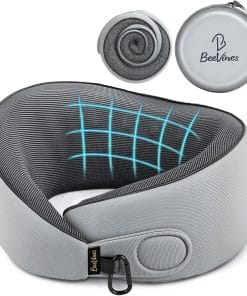
BeeVines Travel Pillow with Carry Case, Memory Foam Neck Pillows for Airplanes, 360° Wrap Around Support for Sleeping, Breathable & Washable Cover for Long Flights, Car & Train Traveling
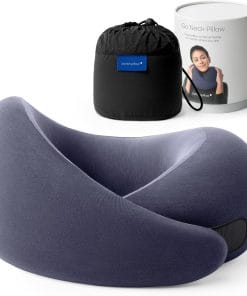
Ostrichpillow GO Travel Pillow, 360° Memory Foam Support, Soft & Washable

Ostrichpillow GO Travel Pillow, 360° Memory Foam Support, Soft & Washable

Ostrichpillow GO Travel Pillow, 360° Memory Foam Support, Soft & Washable
Judge Shape by Contact, Direction, and Space
A shape is useful when its support pattern matches your movement without creating a new seat or accessory conflict.
