
Neck Pillow vs Head Strap for Airplane Sleep: Which Problem Does Each Solve?
A neck pillow adds contact around your body; a head strap stabilizes the head against the seat.
These tools solve different mechanical problems. Decide whether you need neck-side support, forward control, or seat-based stabilization before choosing one or combining them.
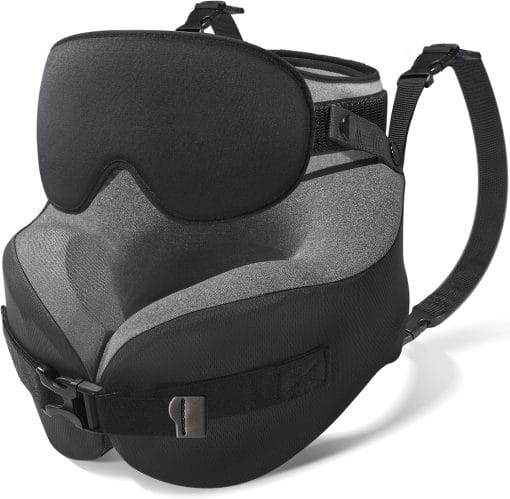
One Supports the Neck; the Other Stabilizes the Head
The two products may appear in the same search results, but they are not direct substitutes in every situation. Start with the type of movement you want to limit.
Body-Worn Contact
A neck pillow creates support through foam, air, fiber, or another structure around the neck, jaw, chin, or shoulders. Its result depends on fit and shape.
- Travels with your body
- May support forward or side movement
- Can conflict with headphones or a thick headrest
Seat-Based Stabilization
A head strap uses the seat or headrest as an anchor to limit head movement. The seat becomes part of the support system, so compatibility matters more.
- Depends on attachment point
- Can reduce head movement without a bulky neck pillow
- Must be positioned without uncomfortable pressure

Check Whether the Product Depends on the Seat
A strap system usually needs a usable headrest or seat attachment point. A neck pillow travels with the body but can still be affected by headrest shape and rear padding.
These Tools Control Movement in Different Ways
A neck pillow creates support through contact around the neck, jaw, chin, or shoulders. A head strap depends on the seat because it stabilizes the head against a fixed surface. That means the two products are not direct substitutes in every situation. A traveler with good seatback contact but poor neck support may prefer a pillow, while someone whose head keeps leaving the seat may care more about stabilization. A focused guide on neck support travel pillow adds useful detail.
The seat attachment is the key limitation for a strap system. Headrests vary in shape, width, and whether they provide a secure path for the strap. Before relying on one for a trip, check the manufacturer instructions and the kind of seat it is designed to use. A product that depends on hardware the seat does not have cannot perform as intended. For another practical angle, see sleeping upright. Another relevant resource is sleeping on long flights.
Choose by Movement, Seat Dependence, and Setup
Use the main trade-offs rather than assuming the smaller or more complex product is better.
| Decision | Neck pillow | Head strap |
|---|---|---|
| Seat dependence Portable | Works with the body but is still affected by headrest shape. | Requires a compatible seat or headrest attachment point. |
| Side support Shape-dependent | Tall side walls or wraparound designs can create side contact. | Stabilization may reduce side movement if the strap geometry allows it. |
| Forward drop Front-contact dependent | Needs chin/front support or another method that limits forward movement. | Can limit forward movement when anchored and positioned correctly. |
| Packing Varies | Foam can be bulky; inflatable designs can pack smaller. | Often compact but may include multiple straps or accessories. |
Freedom of Movement Is Part of the Decision
Some travelers want the head held in a narrow range while they sleep; others dislike feeling attached to the seat. A neck pillow usually allows more independent movement because it travels with the body. A strap can feel more stable but may need to be released when you sit upright, talk to a seatmate, or leave the row. For a closely related guide, see head movement during sleep.
Think about how often you shift position. If you alternate between sleeping and staying awake, the faster system to disengage may be more convenient. If you sleep for long uninterrupted periods, a more fixed setup may be acceptable. Comfort is not only about support while asleep; it also includes how easily the setup fits into the rest of the flight. For this specific topic, review pillow for sleeping on plane.
Verify the Seat Before Relying on a Strap System
A strap can only work as intended when there is a secure and permitted way to position it. Do not assume every airline seat has the same headrest geometry.
Seat check
- Headrest shape: look for wings, covers, or contours that may prevent a strap from sitting flat.
- Attachment path: confirm the product instructions show a usable route around or over the headrest.
- Passenger space: make sure the setup does not extend into another person's area or interfere with seat functions.
- Quick release: understand how to remove the system easily when you need to move or leave the seat.
A Combination Can Make Sense Only When Each Part Has a Job
Some products bundle a pillow, strap, eye mask, or other accessories. A bundle is useful when the pieces solve separate needs rather than simply increasing the item count.
Pillow + Strap
The pillow can provide local neck or chin contact while the strap limits larger head movement against the seat.
Strap + Eye Mask
One addresses head stability and the other light. Check whether straps cross the same area around the temples or ears.
Pillow + Headphones
A high side wall can change headphone fit. Test the final combination before relying on it for a long flight.
Combination Systems Make Sense Only When Both Problems Exist
A pillow plus a head-stabilizing strap can be useful when you need both neck contact and head control, but adding the second component should solve a clear problem. If the pillow already keeps your head within a comfortable range, the strap may add complexity without much benefit. If the strap stabilizes the head but leaves an uncomfortable gap at the neck, a pillow may complete the setup. You can also read about front contact. You can also explore travel pillow with chin support.
Evaluate combination products as systems. Check whether the pillow still fits when the strap is in place, whether the strap path interferes with the pillow, and whether both pieces pack together easily. A well-integrated setup should reduce the number of adjustments you make, not create a sequence of competing straps and closures. See this related airplane head support on Amazon.
Airplane Sleep Options Using Pillow or Strap Support
The live catalog may include neck pillows, strap-based systems, or combination kits. Use the support-method checks above, then verify attachment requirements, dimensions, materials, and listed included components.
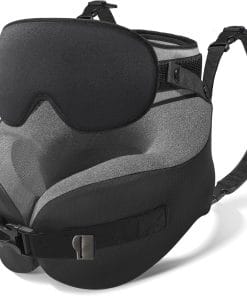
YFONG Travel Pillow for Long Flight Airplane, Head Strap Combo with 3D Contoured Sleep Eye Mask, Neck Pillow for Travel Essential, 360° Support Memory Foam Headrest, Prevent Bobbing, Drawstrap – Black
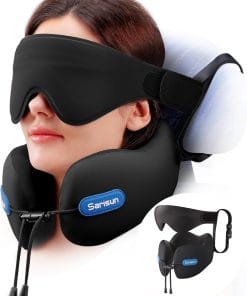
SARISUN Neck Pillow Airplane,Travel Pillow with Strap,Combo 3D Eye Mask for Sleep,Dual-Density Supportive Foam Travel Neck Pillow for Airplane Flights,Car Road Trip Travel Essentials Black

Mewaii Travel Neck Pillow with Hood for Airplanes,Memory Foam,Breathable Ice Silk & Soft Velvet,Double-Sided,Removable to Clean,Adjustable Strap,Portable Travel Pillow for Long Flights Adults & Teens
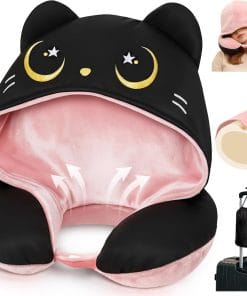
Mewaii Travel Neck Pillow with Hood for Airplanes,Memory Foam,Breathable Ice Silk & Soft Velvet,Double-Sided,Removable to Clean,Adjustable Strap,Portable Travel Pillow for Long Flights Adults & Teens
Choose the Support Method That Matches the Problem
Use a combination only when each component solves a distinct problem and the full setup remains easy to position and remove.
