
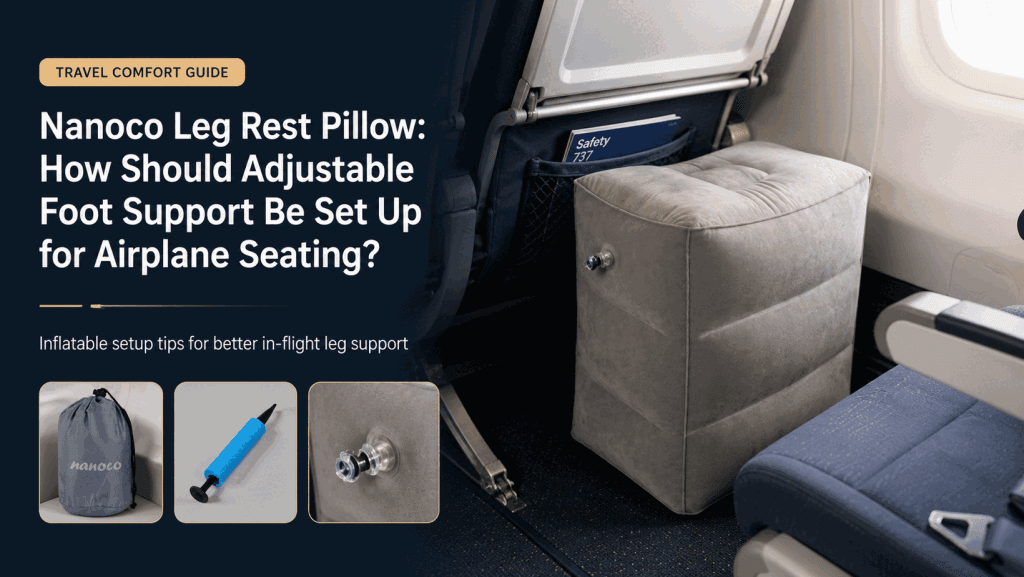
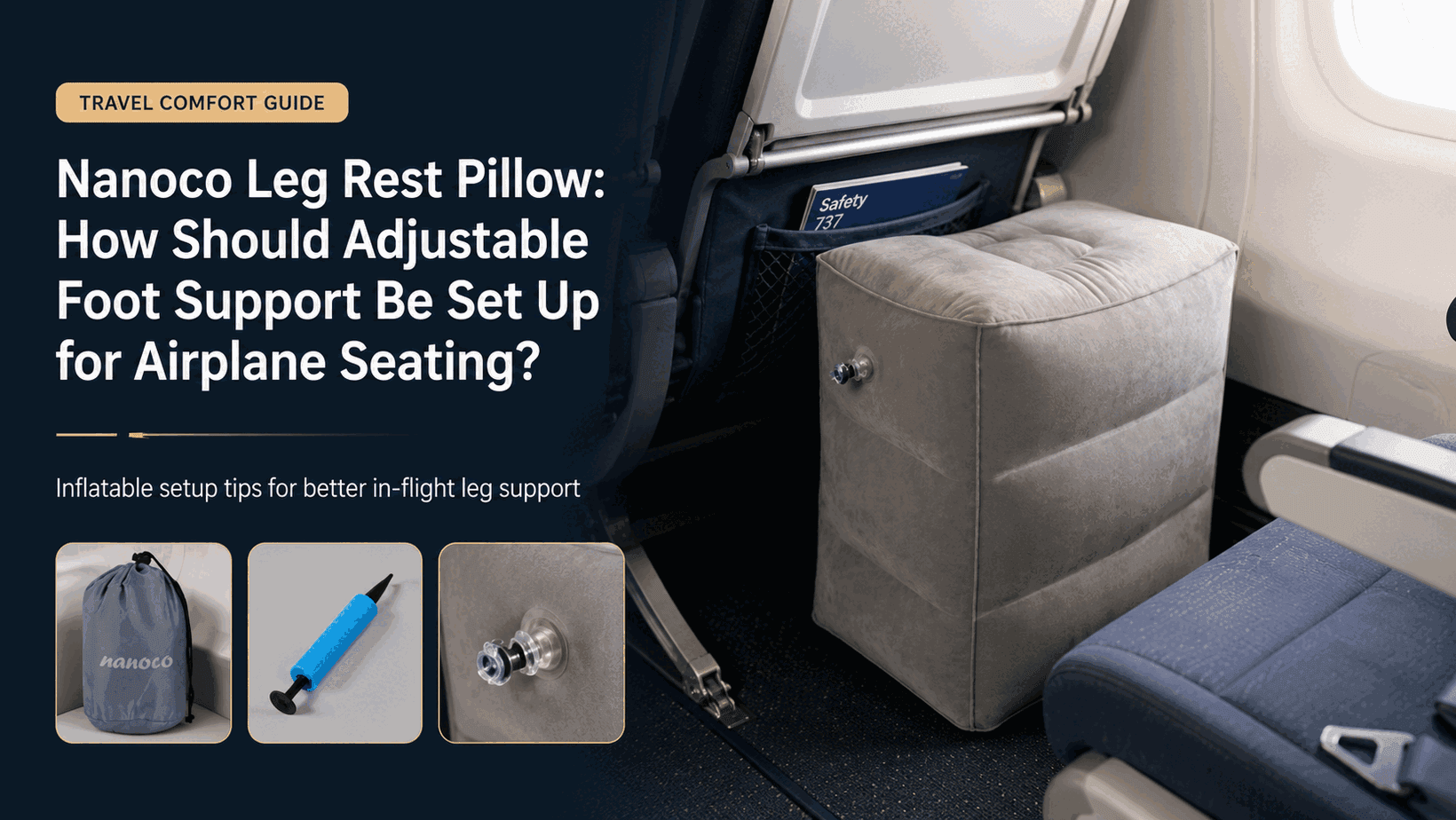
Nanoco Leg Rest Pillow is worth judging around one practical question: how to choose inflation height and placement without blocking the aisle, crowding the seat ahead, or treating a comfort accessory as a circulation device. That is more useful than treating the product name or feature count as proof of comfort. For adult passengers wanting more comfortable leg positioning during extended flights, the best result comes from matching the accessory to the seat, sleeping position, luggage plan, and the length of the trip.
This guide focuses on what can be checked before purchase and during a home trial. It does not assume that one travel product works for every body or every route. The current listing for Nanoco Leg Rest Pillow should be used to confirm dimensions, materials, included pieces, care directions, and any manufacturer updates before ordering.
How To Evaluate Nanoco Leg Rest Pillow For Real Travel
The Nanoco Leg Rest Pillow should first be evaluated in the position where it will actually be used. A soft hand-feel in a product photo tells very little about how the accessory behaves after twenty or forty minutes of seated pressure. Recreate the likely posture at home, include headphones or a jacket if you normally travel with them, and pay attention to pressure points rather than waiting until the trip to discover them.
The useful height is usually the lowest setting that reduces pressure under the thighs or gives the feet a stable place to rest. Too much elevation can sharply bend the hips or knees and may feel worse after an hour. This kind of fit check is especially important because airline, train, bus, car, and hotel seats create different gaps around the neck, shoulders, lower back, or legs. A design can be comfortable in one environment and awkward in another without being defective.
Portability deserves the same level of scrutiny. The accessory has to move through security, connections, boarding, and arrival, not merely fit inside a suitcase at home. Think about where it will live before boarding, how quickly it can be reached, and whether it can be repacked without taking over a neighboring seat or clean floor space.
Height, Foot Position, And Cabin-Space Checks
Support Or Function
Inflatable leg support should be firm enough to hold shape but not so overfilled that it becomes unstable or presses hard against the seat structure. When comparing a inflatable airplane leg support, use the destination as supporting context and then return to the actual product specifications for the final decision.
Packing And Access
An adjustable footrest is useful when it lets the traveler change knee and ankle position without invading another passenger's space. When comparing a adjustable flight footrest, use the destination as supporting context and then return to the actual product specifications for the final decision.
A useful feature should reduce friction in the travel routine. If it takes both hands, a large clean surface, or several minutes to set up, its advantage can disappear in a busy cabin or station.
Comfort During Longer Use
Raising the feet can change comfort, but the cushion must fit safely within the permitted floor area and should never block the aisle. When comparing a elevated feet travel cushion, use the destination as supporting context and then return to the actual product specifications for the final decision.
Cleaning And Maintenance
A pump can reduce setup effort, but travelers should verify its size, power or manual operation, and airline restrictions before packing. When comparing a portable leg rest with pump, use the destination as supporting context and then return to the actual product specifications for the final decision.
Seat Or Sleep-Surface Compatibility
For long trips, regular movement and following medical advice for blood-clot risk matter more than relying on a foot cushion for circulation. When comparing a passenger circulation comfort, use the destination as supporting context and then return to the actual product specifications for the final decision.
Seat and sleeping surfaces change support geometry. Recheck the setup when switching from aircraft to car, train, campsite, or hotel instead of assuming the same orientation will work everywhere.
Travel-Day Practicality
A compact foot support still has to comply with baggage and cabin-stowage rules and may not be permitted during takeoff or landing. When comparing a compact airplane foot support, use the destination as supporting context and then return to the actual product specifications for the final decision.
Practical Comparison Checklist
Use the table as a pre-purchase and pre-trip check. The goal is to turn broad marketing language into something you can actually test.
| Area | What to Assess | A Useful Result |
|---|---|---|
| Height | Knee and hip angle | Legs feel supported without sharp flexion |
| Footprint | Seat-space fit | Support remains within your own floor area |
| Inflation | Firmness | Stable without becoming rock hard |
| Pump | Travel practicality | Easy to pack and permitted for the trip |
| Stowage | Takeoff and landing | Deflates or stores quickly when required |
Set Up The Foot Support Conservatively
Inflate the product at home and measure its footprint. Practice using lower and higher settings in a chair with similar legroom, keeping both feet supported and the knees free of pressure from the seat ahead.
Do the trial with the bag, clothing, headphones, or bedding you expect to use on the trip. Small conflicts—such as a high pillow edge touching headphone cups or a storage pouch that does not fit the chosen pocket—are much easier to solve at home than after boarding.
Pre-Trip Checklist
- Check airline policy before travel
- Measure the inflated footprint
- Start with the lowest useful height
- Keep the aisle completely clear
- Move ankles and legs regularly
- Stand or walk when safe and allowed
- Deflate when crew instructs
- Dry and inspect valves before storage
Who Is Most Likely To Appreciate It
For adult passengers wanting more comfortable leg positioning during extended flights, this design is easiest to justify when its primary function solves a recurring problem and the accessory is convenient enough to be carried on most relevant trips. If it stays at home because it is awkward to pack, difficult to clean, or too specialized, a simpler alternative may deliver more value.
Inflatable footrests pack small but require setup and may be restricted by individual airlines. Fixed hammock-style rests are quicker to deploy but depend on tray-table attachment and may not suit every seat. Compare that compromise with the alternatives you already own. The right question is not whether the product has more features, but whether its strongest feature improves the specific trip often enough to justify cost and luggage space.
Safety and Comfort Boundary
Do not use a leg rest to manage blood-clot risk or a medical condition without professional advice. Travelers with elevated clot risk should discuss prevention with a healthcare provider and follow airline and crew instructions.
A Practical Take On Nanoco Leg Rest Pillow
The Nanoco Leg Rest Pillow makes the most sense when the traveler can explain exactly which problem it solves, where it will be stored, and how it will be cleaned. Test the core function in realistic conditions, then judge secondary features only after fit and usability are satisfactory.
Before buying, verify the current product listing and return terms, because materials, bundles, dimensions, and accessories can change. A short home trial and a clear packing plan usually reveal more than a long feature list.
Frequently Asked Questions
Are inflatable footrests allowed on every airline?
No. Policies vary, and crew members can require an item to be stowed. Check the operating airline before travel.
How high should an airplane leg rest be?
Use the lowest height that feels supportive without excessive knee or hip flexion and without contacting the seat ahead.
Can a footrest improve circulation?
Comfortable positioning may help you move more easily, but it does not replace regular movement or medical advice for clot prevention.
Should the cushion be fully inflated?
Not necessarily. Overinflation can reduce stability and comfort. Follow the product's inflation guidance.
Can children use an inflatable leg rest?
Check airline policy, product age guidance, and child-safety considerations; some airlines restrict devices that fill the footwell.
