
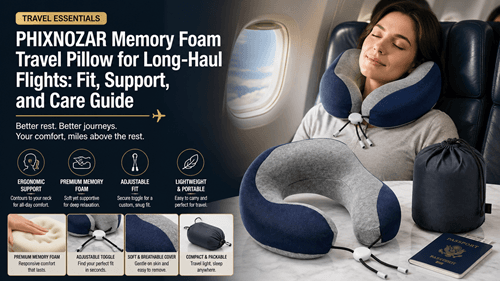
PHIXNOZAR Memory Foam Travel Pillow is most useful when its shape matches the gap between your shoulders, neck, seatback, and preferred sleeping direction. On a long-haul flight, small fit problems become more obvious after an hour, so the buying decision should focus on controlled support rather than softness alone. This guide explains how to test the pillow at home, pack it without adding unnecessary bulk, and care for the removable cover after repeated travel.
Long-haul economy travelers should also separate comfort from medical claims. A travel pillow can help reduce unwanted head movement or fill an awkward seat gap, but it cannot guarantee sleep or prevent neck pain. Confirm the current product listing, cover-care instructions, dimensions, and materials before ordering, then test the pillow in a chair that approximates your normal airline posture.
How To Fit PHIXNOZAR Memory Foam Travel Pillow For Long-Haul Flights
Start with shoulder width and head position. Sit upright with your back against the chair and let your head relax naturally. The pillow should contact the neck without forcing the chin sharply upward or pushing the head forward. If the support feels comfortable only when you consciously hold a posture, it may become tiring during an overnight flight.
Next, repeat the test with the clothing and headphones you normally use in the cabin. Hoodies, jacket collars, over-ear headphones, and seat wings can change the available space. The same pillow may feel supportive in a dining chair but crowded in a narrow aircraft seat, so testing several positions gives a more realistic picture.
Finally, test removal and repacking. A good long-haul accessory should be easy to reach before takeoff, move out of the way for meals, and stow again before landing. These routine details often determine whether a pillow is used for the whole trip or becomes an item that stays clipped to the bag.
Support, Cover Care, And Cabin Practicality
Match The Foam Shape To Your Neck
A contoured foam neck support should fill space without creating a hard pressure point behind the jaw or at the base of the skull. Compare the current product photographs with your normal sleeping direction and confirm whether the shape can be reversed or rotated if one side feels better.
Foam firmness also changes with temperature and compression history. Give a newly unpacked pillow time to recover, then test it for at least twenty to thirty minutes instead of judging the first squeeze with your hand.
Check The Cover Before A Long Trip
A washable travel pillow cover matters because neck pillows contact skin, hair, seat surfaces, and luggage repeatedly. Confirm whether only the cover is washable, how it closes, and whether the zipper or seam is comfortable against the neck.
If the foam itself is not washable, keep it dry and follow the manufacturer care directions. Let the pillow air fully after travel before storing it, especially if it was used in a warm cabin or packed immediately after a connection.
Test Comfort In An Upright Seat
For long-haul seat comfort, compare forward, side, and slightly reclined positions. The goal is not to lock the head in one place; it is to reduce the amount of unsupported movement that wakes you or makes you constantly readjust.
Use the seat belt, armrests, and tray-table clearance during a home simulation. A pillow that feels excellent when fully reclined may interfere with the seatback when the aircraft cabin requires a more upright position.
Budget Space In Your Personal Item
A lightweight carry-on neck cushion still counts as something you need to manage through boarding and stowage. Airline limits vary, and the FAA advises passengers to check the carrier’s carry-on rules and keep the cabin area free of loose hazards.
Decide before the trip whether the pillow goes inside the personal item, in a dedicated travel bag, or on an approved attachment point. Avoid a long dangling strap that can catch on seats or other luggage.
Watch Head Position Instead Of Marketing Terms
An upright sleep posture aid is useful only if it reduces the head drop or side bend that bothers you. Compare support at the jaw, side of the neck, and back of the head, then loosen or reposition the pillow if it causes pressure.
People have different shoulder slopes and neck lengths, so a shape praised by one traveler may not suit another. Fit should be judged on your body rather than by a universal comfort claim.
Build A Repeatable Cleaning Routine
A simple airplane pillow care routine should include checking the cover after each trip, washing it according to the label, drying it completely, and inspecting the foam for odor, damage, or permanent deformation before storage.
Store the pillow where it can keep its intended shape. If the manufacturer permits compression for travel, use compression only as directed and allow the foam to recover before the next long flight.
Long-Haul Fit And Packing Comparison
Use a home trial to compare support with the space the pillow occupies. The best choice is the one that remains useful after several seat positions, not the one with the most aggressive shape.
| Check | Good Sign | Reason To Reconsider |
|---|---|---|
| Rear neck fit | Support touches without pushing the head forward | Chin is forced down or head is pushed ahead |
| Side support | Head tilt is reduced without jaw pressure | Edge presses into jaw or ear |
| Cover | Removes and refits easily | Care requires cleaning the foam contrary to instructions |
| Packing | Fits the planned personal-item setup | Displaces more important travel items |
| Recovery | Foam returns to shape after normal packing | Permanent flattening or uneven support |
Run A Thirty-Minute Long-Haul Seat Test
A short squeeze test cannot show how a memory-foam pillow behaves once body heat, headphones, clothing, and repeated repositioning are involved. Recreate the sequence you expect to use during a real flight and pay attention to the moments when you instinctively remove the pillow.
Home Test Sequence
- Wear your normal travel top or jacket
- Sit against a firm seatback
- Fit the pillow without forcing the chin
- Test left, right, and forward head positions
- Wear your usual headphones
- Stay seated for at least thirty minutes
- Remove and refit the cover
- Pack and unpack the pillow once
- Check whether the foam fully recovers
If the pillow is comfortable only in one very precise position, decide whether that limitation matches your usual seat choice. A window-seat sleeper and an aisle-seat traveler may value different support zones.
Know What A Travel Pillow Cannot Guarantee
Comfort Is Personal
A travel pillow is a comfort accessory, not a medical device. Persistent neck pain, numbness, weakness, headaches, or symptoms after an injury should be discussed with a qualified healthcare professional rather than managed by changing pillows alone.
During takeoff, landing, turbulence, and any time crew instructions require it, keep your body, seat belt, and personal items positioned as directed. Comfort accessories should never interfere with the seat belt, aisle access, or safe stowage.
Choose PHIXNOZAR For Fit Before Softness
The PHIXNOZAR Memory Foam Travel Pillow makes the most sense when its contoured shape fits your neck in the actual posture you use on long flights and when the extra foam bulk is acceptable in your carry-on plan.
Test it with clothing and headphones, confirm the washable-cover routine, and judge support over time. That gives a better buying signal than relying on a short softness test or a generic claim about long-haul comfort.
Frequently Asked Questions
Is memory foam better than an inflatable pillow for long flights?
Memory foam usually offers more structured support, while inflatable pillows pack smaller and allow air-pressure adjustment. The better choice depends on fit and luggage space.
Should the pillow push my chin upward?
No. Support should feel stable without forcing the head or jaw into an uncomfortable position.
Can the memory foam itself be washed?
Follow the manufacturer directions. Many memory-foam products allow the cover to be washed but not the foam core.
How should I pack a memory-foam neck pillow?
Use the supplied bag or compression method only as directed and allow the foam to recover before use.
Can a travel pillow prevent neck pain?
No pillow can guarantee prevention or treatment of neck pain. Seek medical advice for persistent or significant symptoms.
