
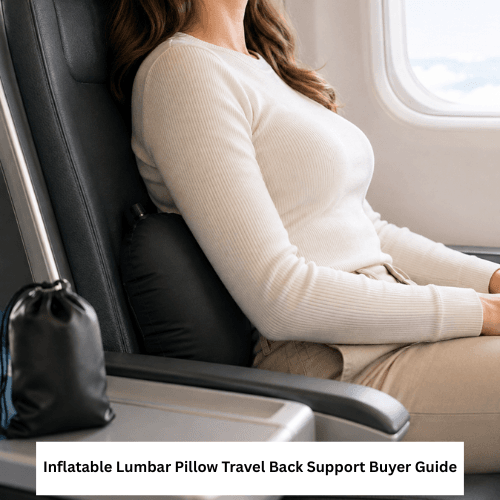
An inflatable lumbar pillow can add adjustable support between the lower back and a flat or curved travel seat. It may help on airplanes, in cars, or during long office sessions, but it should not force the spine forward or create pressure.
The best travel back support pillow should fit the user’s body and the seat rather than simply filling every gap. At inflatable travel pillow, buyers can compare compact options while checking position, firmness, cover care, valve access, and return terms before ordering.
How an Inflatable Lumbar Pillow Should Support the Back
Place the pillow around the natural inward curve of the lower back, usually near belt level, then inflate gradually. The goal is gentle contact that helps the user sit upright without arching excessively. Release air if the shoulders move forward, the hips slide, or pressure builds in one spot.
A travel lumbar support pillow should match the curve of the seat as well as the user’s torso. Deep seats may need less thickness than flat seats, so adjustable inflation is more useful than a fixed maximum size.
A compact lumbar travel pillow is useful when carry on space is limited, but verify its pack dimensions and whether the storage pouch is included. A very small air chamber may create a narrow pressure point instead of broad support.
| Support type | Best use | Main benefit | Limitation | Verify before buying |
| Inflatable back support | Flights cars and compact packing | Adjustable firmness | Valve or seam can leak | Inflation range and valve access |
| Memory foam lumbar pillow | Office and car use | Consistent contour | Bulkier to carry | Seat depth and foam recovery |
| Convertible travel pillow | Multiple body positions | One item for several uses | Less specialized support | Shape stability in lumbar mode |
| Rolled towel or clothing | Temporary adjustment | No extra purchase | Uneven and difficult to secure | Safe placement and seat belt clearance |
Seat Compatibility and Safety
For airplane lumbar support, check whether the pillow stays within the seatback and does not interfere with the seat belt. A window or aisle position can change how easily the valve is reach. Avoid a shape that pushes the user into the tray table or reduces comfortable legroom.
For a car lumbar pillow, confirm that it does not affect safe steering distance, mirror visibility, head restraint position, or seat belt routing. Drivers should set the pillow before moving and should not adjust or inflate it while driving.
A washable inflatable lumbar pillow is easier to maintain when the cover remove without damaging the valve area. Verify the approved washing method because the air chamber may require wiping rather than machine washing.
A multi position travel pillow may also support the neck, legs, or lower back, but test the lumbar configuration carefully. Flexible designs can shift more easily than a dedicated lower back travel pillow.
Buyers can review an airplane lumbar support example to compare stated dimensions, attachment method, materials, and care information before choosing.
Setup Tips for Flights Cars and Office Chairs
Sit fully back in the seat before placing the air support cushion. Start with minimal air, position it at the lower back curve, and add small amounts until support feels even. Test for several minutes because a pillow that feels comfortable immediately may become too firm during longer sitting.
If the pillow has a strap, verify that the strap fits the seat without blocking controls or stretching across another passenger’s space. On shared or delicate seats, check whether buckles or textured backing could mark the surface.
Troubleshooting Common Problems
If the pillow slides upward, reduce inflation and check strap position or cover grip. If one side feels harder, deflate and reinflate on a flat surface while inspecting the chamber. If support fades, confirm the valve is closed and check seams for damage. Stop using a damaged air chamber rather than repeatedly overinflating it.
If numbness, weakness, severe pain, or pain that continues after travel occurs, seek advice from a qualified health professional. A lumbar pillow is a comfort accessory and is not a diagnosis or treatment.
Cleaning Maintenance and Replacement Checks
Follow the product care label. Remove and wash the cover only as directed, wipe the air chamber with an approved mild method, and dry all parts completely before packing. Store away from sharp objects, high heat, and heavy compression that could stress the valve.
Before buying, check whether the maker offers a replacement cover, valve guidance, warranty process, return window, and support. Verify delivery timing when the pillow is need for a trip.
Buying Checklist
- Check lower back curve and required pillow height
- Confirm airplane car and office seat compatibility
- Verify seat belt headrest and driver clearance
- Inspect materials seams valve strap and cover
- Test gradual inflation and easy deflation
- Review cleaning drying and storage instructions
- Check warranty return policy and replacements
- Confirm delivery timing and customer support
- Verify every product specific claim before buying
Conclusion
A suitable inflatable lumbar pillow should provide broad adjustable support without forcing the body forward or interfering with safe seating. Compare seat shape, inflation control, materials, cleaning, packing, and return terms before choosing a lower back travel pillow.
FAQ
Where should an inflatable lumbar pillow sit?
Place it around the natural lower back curve near belt level, then adjust until support feels even and gentle.
How much should a lumbar pillow be inflated?
Start with a small amount of air and increase gradually. Stop before the pillow pushes the hips or shoulders forward.
Can a lumbar pillow be used in a car?
Yes, when it does not affect steering distance, head restraint position, seat belt routing, or visibility.
Why does my inflatable back pillow keep sliding?
It may be overinflated, positioned too high, or used with a smooth cover. Adjust firmness and strap placement.
How should the pillow be stored?
Clean and dry it fully, release air as directed, and store it away from heat, sharp objects, and heavy pressure.
