
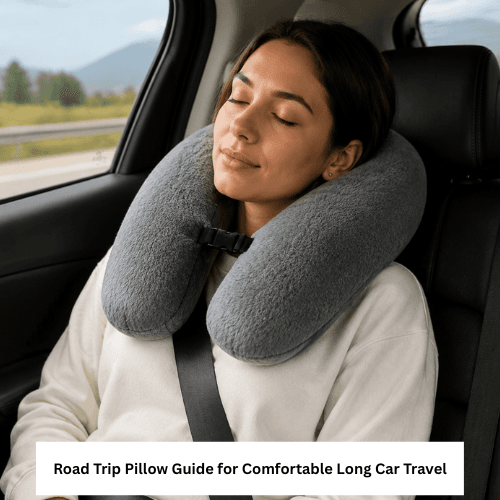
A road trip pillow can help a passenger rest more comfortably when it fits the seat, neck, body position, and vehicle safety system. The pillow should never change the path of the seat belt, interfere with an airbag, or be used by the driver while the vehicle is moving.
Car seats and head restraints differ, so test the pillow in the actual vehicle before a long journey. A thick pillow that works on a flat chair may push the head forward in a contoured passenger seat.
How to Choose a Road Trip Pillow
Match the pillow to the passenger and the seating position rather than choosing only by appearance.
| Pillow style | Best use | Main benefit | What to verify |
| Inflatable neck pillow | Adults wanting adjustable firmness | Packs small between stops | Valve position and headrest clearance |
| Memory foam neck pillow | Passengers who prefer stable cushioning | Holds its shape | Bulk, heat, and rear thickness |
| Seat belt pillow | Side resting for selected passengers | Soft contact beside the shoulder | Must not alter belt routing |
| Back seat head support | Children or adults in compatible seats | Supports side resting | Vehicle and restraint compatibility |
| Lumbar pillow | Lower back support | Fills the seat gap | Thickness and belt interaction |
A road trip pillow should allow the passenger to sit upright enough for the seat belt to remain correctly positioned.
Never place a pillow behind or beneath a child in a car seat unless the car seat manufacturer specifically approves it.
Product Options for Car Passengers
The FHSGGP back seat travel pillow is designed around car travel, but buyers should verify attachment method, seat compatibility, passenger age, and whether it affects the seat belt.
An ergonomic Sphyrna car seat travel pillow for kids may appear useful for side support, although parents must confirm compatibility with the vehicle seat and child restraint instructions.
The Ostrichpillow Go car travel neck pillow can be compared for adult passenger use, but verify rear thickness, neck opening, warmth, and packed size.
A black memory foam car travel pillow may provide stable neck support, provided it does not force the head forward or restrict normal movement.
The Sunany inflatable pillow for cars and buses offers adjustable firmness and compact packing, but buyers should confirm valve placement, size, and seat compatibility.
Set Up the Pillow Before Driving
Adjust the passenger seat and head restraint first. Put on the seat belt correctly, then position the pillow without moving the belt from its intended path.
Test whether the passenger can turn the head, exit the vehicle, and remove the pillow easily.
Store loose carry bags, pumps, and accessories so they cannot become projectiles during sudden braking.
Drivers should not wear sleep pillows or any accessory that restricts head movement, awareness, or control.
Comfort During Long Car Rides
Take regular breaks according to the driver’s plan and passenger needs. A pillow does not replace movement, hydration, ventilation, or appropriate rest stops.
If the passenger becomes hot, numb, dizzy, or uncomfortable, remove the pillow. Children and people with medical concerns check frequently.
Cleaning and Storage
Use a removable washable cover when available. Dry every part before placing it in a closed vehicle compartment.
Heat inside a parked car can affect foam, plastic valves, adhesives, and fabric, so follow storage temperature instructions.
Keep inflatable pillows away from sharp seat hardware and pet claws. Do not leave a pillow loose on the dashboard or rear shelf.
Common Buying Mistakes
Common errors include buying without testing the headrest, using adult accessories with child restraints, and assuming every car seat pillow is safety approved.
Shoppers can review a car travel pillow for kids and adults listing as an external comparison and verify fit, attachment, materials, seller details, and return terms.
Car Travel Buying Checklist
Use this road trip pillow checklist before ordering.
- Check passenger age, body size, and preferred sleeping position.
- Measure the seat headrest and available neck space.
- Confirm seat belt, airbag, and child-restraint compatibility.
- Compare inflated or expanded dimensions and packed size.
- Inspect material, seams, closures, and valve quality.
- Test setup and removal before the journey.
- Review cleaning and hot-vehicle storage instructions.
- Check replacement covers, warranty, return policy, delivery, and support.
- Verify before buying when vehicle compatibility is unclear.
Conclusion
The right road trip pillow should improve passenger comfort without changing seat belt routing, head-restraint function, or safe movement. Inflatable travel pillow offers relevant compact, memory foam, and car-focused products for travelers planning longer drives.
FAQ
Can the driver use a neck pillow while driving?
A driver should not use any pillow that limits awareness, head movement, or vehicle control.
Can I add a pillow to a child car seat?
Only use accessories approved by the car seat manufacturer for that exact restraint system.
Is an inflatable pillow better for car travel?
It packs smaller and allows firmness adjustment, but fit and valve placement must suit the seat.
Where should the pillow be stored between stops?
Keep it secured away from the dashboard, rear shelf, pedals, and other areas where it could move during braking.
