
Kids Travel Pillow vs Inflatable Footrest: Two Different Travel Comfort Tools
A neck pillow supports around the head or neck; a footrest changes lower-body positioning and needs usable seat-floor space.
Treat them as separate product types. Decide which body area or travel problem you are trying to address before looking at size, materials, inflation, or style.

The Two Products Work in Different Parts of the Travel Setup
Choose based on the actual problem, not which item has more features. A pillow and a footrest can both be comfortable, but they change different contact points.
Upper-Body Contact
A neck or compact travel pillow is worn or positioned near the head, neck, jaw, or shoulders. Fit, side height, and seatback geometry are central questions.
- Check dimensions and support zone
- Review wash instructions
- Confirm easy removal
Lower-Body Positioning
A footrest uses space around the legs, feet, or floor area. Inflated dimensions, stability, setup time, and travel-provider rules become more important.
- Check inflated footprint
- Review valve and setup
- Confirm permitted use for the trip
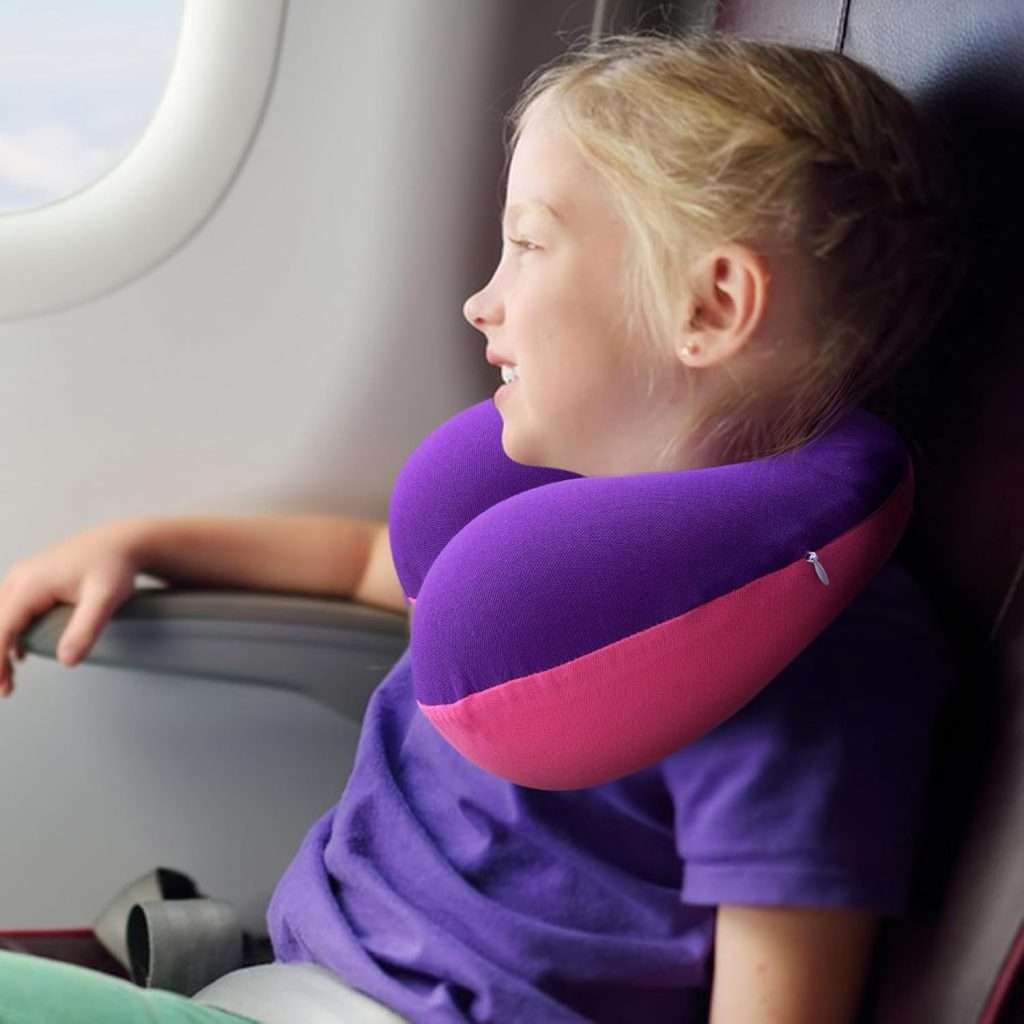
Identify the Body Area Before Comparing Features
The easiest mistake is treating both products as general comfort accessories. One works near the neck or head, while a footrest depends on lower-body space and the seat environment.
A Neck Pillow and a Footrest Solve Different Problems
A kids neck pillow is intended to change how the head or neck is supported during rest. An inflatable footrest changes the lower-body setup by filling floor space or creating a surface for the legs. Because they act on different parts of the body, one should not be treated as a direct replacement for the other simply because both appear in a travel-comfort category. A focused guide on toddler travel pillow adds useful detail.
Start by identifying the discomfort you are trying to reduce. If the child struggles mainly with head lean while sleeping, neck support is the more direct product category to examine. If the issue is dangling legs or difficulty finding a comfortable lower-body position, a footrest is closer to that problem. Clear intent prevents buying a product that never addresses the original complaint. For this specific topic, review travel pillow for kids.
Use the Right Questions for Each Product Type
The same checklist does not work for both products because their fit and space requirements are different.
| Decision factor | Travel pillow | Inflatable footrest |
|---|---|---|
| Body area Upper body | Neck, chin, side of head, or shoulder contact depending on shape. | Legs or feet; does not replace neck support. |
| Space needed Body-worn | Main conflicts are side height, rear thickness, and accessories. | Needs floor or seat-area space when inflated. |
| Setup Usually quick | Position, close, or inflate depending on design. | Inflate, place, and stabilize before use. |
| Travel restrictions Fit-related | Follow product instructions and seat or restraint guidance. | Provider rules can be especially important for floor-space products. |
Footrests Depend More Heavily on the Space Around the Seat
An inflatable footrest needs usable floor or seat-gap space, so its practicality changes with the transport environment. The available area can vary between aircraft, cars, trains, and different seat rows. Before planning to use one, check the product instructions and the rules or space constraints relevant to the trip. A neck pillow is generally less dependent on floor space, though it still needs to fit the seat and child. For another practical angle, see young travelers. Another relevant resource is young traveler pillow.
Inflation adds another consideration. A footrest may need to be filled, positioned, adjusted, and later deflated before packing. That routine can be reasonable on a long journey but less attractive on a short connection. Compare the setup time with how long the product will actually be used and whether an adult will need to manage it each time. See this related inflatable footrest on Amazon.
Verify Space and Rules Before Packing a Footrest
Inflatable footrests can depend heavily on the seat environment. Do not assume a product that fits physically is automatically permitted on every carrier or in every seating situation.
Before the trip
- Check inflated dimensions: confirm the product does not extend beyond the available space.
- Review carrier guidance: look for current rules that apply to inflatable footrests or floor-space accessories.
- Plan setup and removal: make sure the item can be deflated or moved quickly when required.
- Keep restraint areas clear: follow all seat, restraint, and crew instructions for the specific trip.
Start With the Problem You Want the Product to Address
A simple problem statement helps avoid buying the wrong product type.
Head or Neck Movement
Start with a travel pillow when the main issue is head position, neck-side contact, or a need for a compact cushion near the upper body.
Leg or Foot Position
Start with a footrest when the main issue is lower-body positioning and the travel setting provides permitted space for it.
Both Problems
Treat the products as two separate decisions. Confirm each item fits the space and rules instead of assuming a bundle is automatically better.
A Combined Setup Should Stay Simple
Some families may use both a neck pillow and a footrest, but more accessories do not automatically create a better travel experience. Each item adds something to carry, clean, and keep track of. If the child is comfortable with one product alone, adding another may not be necessary. Build the setup around the problem that appears most often. You can also explore airplane comfort accessories.
When both are useful, test how they work together before travel. Check whether the child can sit normally, use the tray area as needed, and remove either product without disturbing the other. A successful travel setup should make the seat easier to use, not turn it into a complicated arrangement that has to be rebuilt every time the child moves. For a closely related guide, see portable child travel pillow.
Kids Travel Comfort Options Across Pillow and Footrest Types
The catalog may place several kids comfort products together. Use the use-case checks above to separate neck or head support from lower-body products, then verify the listing and current travel-provider rules.

COOLBEBE Kids Travel Neck Pillow, Softly Double Support Neck Pillow for Car & Airplane, Traveling Gifts for Toddler & Children (1, Pinkish Purple)

COOLBEBE Kids Travel Neck Pillow 2PCS Softly Double Support Neck Pillow for Car & Airplane, Traveling Gifts for Toddler & Children(Blue & Pink)

INFANZIA Kids Chin Supporting Travel Neck Pillow, Helps Support Head and Neck, Comfortably Designed for Head, Neck, and Chin Support – Gifts for Toddler/Child/Kids, Pink

Jay Franco Marvel Spidey and His Amazing Friends Kids Travel Neck Pillow – Soft Polyester Support for Car, Airplane & Road Trips – Comfortable Child Neck Support for Ages 3-10
Choose the Tool for the Body Area and Travel Setting
The best starting point is the problem to solve, followed by the physical space and current rules of the travel setting.
