
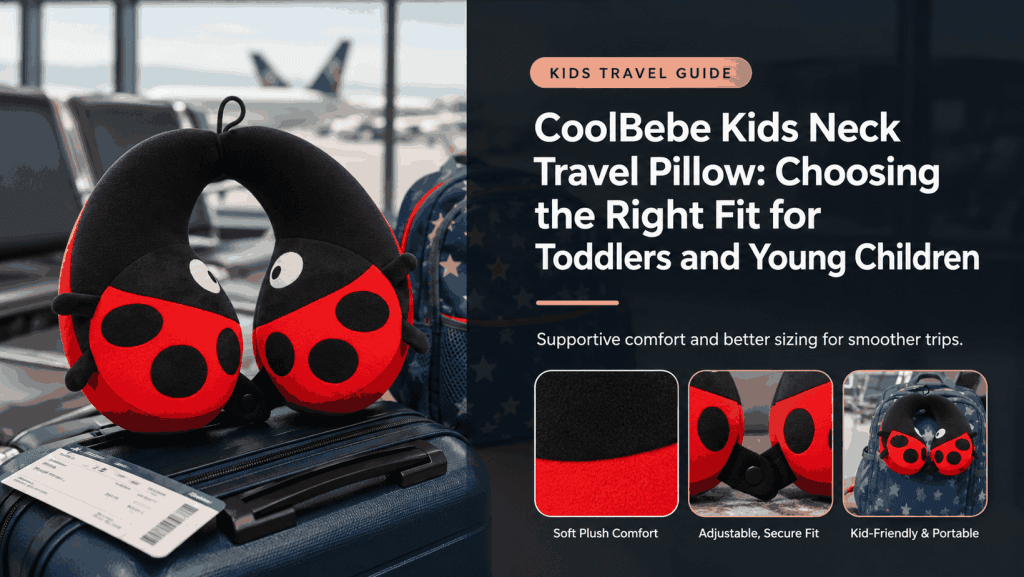
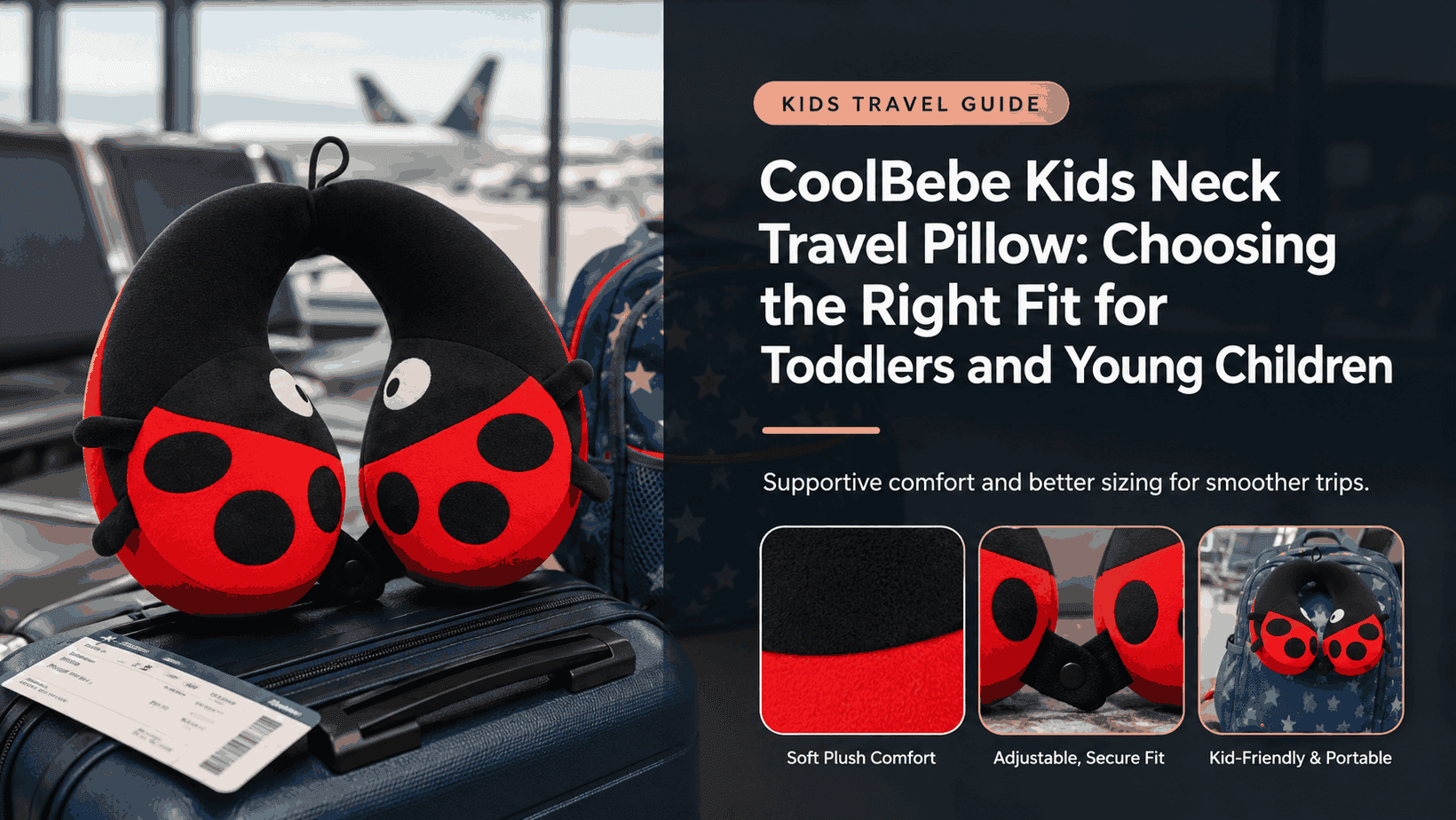
CoolBebe Kids Neck Travel Pillow should be evaluated around the child’s size, seat, restraint system, and ability to keep a natural head position. A cute animal shape can encourage a child to use the pillow, but appearance should never outweigh safe restraint fit or a comfortable airway and chin position.
Parents of toddlers and young children should test any travel pillow while the child is awake and supervised before a long trip. In a vehicle, the car-seat or booster manufacturer’s instructions take priority over an aftermarket cushion. On an airplane, follow crew instructions and make sure the accessory does not interfere with the child restraint system or seat belt.
How To Fit CoolBebe Kids Neck Travel Pillow Safely And Comfortably
Start with the child sitting upright and awake. Place the pillow without tightening or wedging it into the restraint system, then check whether the child can look forward, turn the head naturally, and breathe comfortably.
Check the back of the head and neck. A thick rear section can push the head forward when the seat already has substantial padding. Side support should not force the face toward the chest or place pressure under the jaw.
Repeat the fit as the child grows. A pillow that worked on one trip may become too small, too tight, or too tall several months later.
Chin Support, Restraint Fit, And Nap Position
Use Chin Support Conservatively
A toddler head chin support should never hold the child’s jaw in a forced position. The child should be able to move the head and keep the face unobstructed.
If the head drops significantly during sleep, first review the seat recline and restraint setup permitted by the manufacturer rather than adding more padding.
Do Not Alter A Car-Seat Fit
A child car-seat neck cushion must not interfere with the harness, belt path, headrest, or approved seating position. NHTSA directs caregivers to follow the specific car-seat manufacturer’s instructions and choose restraints based on the child’s age and size.
Aftermarket accessories may not be approved for use with every seat. If the car-seat manual does not permit the pillow, use it elsewhere instead of improvising.
Check Animal Shapes For Bulk
An animal travel pillow fit can be visually appealing, but ears, paws, or raised decorative areas should not press against the child’s face or push the seat belt away from its intended path.
Inspect seams and small decorative components before each trip. Stop using a damaged pillow if filling or parts can be accessed.
Observe Nap Position While Supervised
For kids nap posture, watch how the child’s head settles after several minutes, not just the first seated position. Look for forward head push, an extreme chin-to-chest angle, or repeated attempts to remove the pillow.
A child who looks uncomfortable or overheated should be repositioned and the pillow removed. Comfort accessories should be easy to take away quickly.
Match The Opening To The Child
A U-shaped child pillow should not feel tight around the neck. The opening needs enough room for easy removal while still placing the support where intended.
Avoid using adult sizing assumptions for a small child. Review the current product dimensions and any age or size guidance before purchase.
Plan For Road-Trip Stops
Good family road-trip comfort includes regular breaks, hydration, temperature control, and correct restraint use. A neck pillow is a small comfort item within that larger plan.
Keep the pillow clean and dry between stops and store it so it cannot become a loose projectile in the vehicle when not being used.
Child Pillow Fit Checklist
Use the child’s restraint and body position as the pass-or-fail test.
| Check | Acceptable Fit | Stop Or Reconsider |
|---|---|---|
| Neck opening | Loose enough for easy removal | Tight around neck or jaw |
| Rear thickness | Head stays naturally positioned | Head is pushed forward |
| Side support | Reduces mild side lean | Covers face or creates jaw pressure |
| Restraint | Harness or belt remains exactly as designed | Accessory changes belt or harness path |
| Temperature | Child remains comfortable | Sweating or repeated attempts to remove pillow |
Run A Supervised Fit Test Before Travel
Test the pillow when the child is awake so they can describe discomfort or show resistance. Do not wait for a long drive or flight to discover that the shape conflicts with the seat.
Parent Fit Check
- Read the car-seat or booster manual
- Confirm the pillow is allowed in that setup
- Seat and buckle the child correctly first
- Place the pillow without moving the harness
- Check chin and airway position
- Watch head position for ten to fifteen minutes
- Remove the pillow if the child resists
- Recheck fit after growth spurts
- Inspect seams before each trip
For flights, follow airline and crew directions for child restraints and stowage. The safest travel setup is the one that preserves the approved restraint system without modification.
Do Not Use A Pillow To Modify A Safety Restraint
Safety Instructions Override Comfort
Car seats and booster seats are engineered as systems. Do not place a pillow behind the child, under harness straps, or anywhere the restraint manufacturer does not permit.
If a child has unusual head control, muscle tone, breathing issues, or other medical needs, ask the child’s healthcare team about travel positioning rather than choosing an accessory by general advice.
Choose CoolBebe By Restraint Compatibility And Fit
The CoolBebe Kids Neck Travel Pillow is most appropriate when it sits comfortably around the child without changing the approved restraint fit or forcing the head and chin into an awkward position.
Test it supervised, review the car-seat or airline rules, and recheck sizing as the child grows. Cute design can help acceptance, but safe fit remains the deciding factor.
Frequently Asked Questions
Can a kids neck pillow be used with every car seat?
No. Follow the specific car-seat manufacturer’s instructions. Do not use an aftermarket accessory if it changes or conflicts with the approved restraint setup.
Should the pillow stop a child’s head from moving completely?
No. It should not immobilize the head or force the chin. The child should remain naturally positioned and comfortable.
How do I know if the pillow is too thick behind the head?
If it pushes the head forward or changes the harness or belt position, remove it and choose a different setup.
Can the pillow be used on an airplane?
Use it only when it does not interfere with an approved child restraint, seat belt, or crew instructions.
How often should I recheck the size?
Recheck before each trip and after growth spurts because neck, shoulder, and seat fit change quickly in young children.
